Keeping Client Details at Your Fingertips Without a Digital Overload
There is something quietly reassuring about a physical book designed to hold the details that matter most to your working relationships. The Client Profile Tracker Book KDP Interior is exactly that—a ready-to-use, professionally structured interior file set that lets you create a bound record of your client interactions, preferences, and contact points. It is not software. It is not a subscription. It is a thoughtful layout you can print, bind, and keep on your desk, turning scattered notes into one coherent reference.
Many of us have felt the fatigue of juggling spreadsheets, CRM dashboards, and sticky notes plastered around a monitor. A printed client tracker offers a different rhythm. Instead of clicking through tabs, you flip to a page. Instead of waiting for an app to load, you see everything at a glance. The format encourages intentionality—you write something down because it genuinely matters.
When a Paper-Based Tracker Makes More Sense Than an App
Technology has undoubtedly streamlined client management, yet certain work environments and personal preferences call for something simpler. A hair salon owner with a steady stream of regulars might find that pulling up a tablet in the middle of a blow-dry feels clunky. A personal trainer moving between gym stations might not want to thumb-type notes mid-session. A freelance photographer shooting on location may prefer jotting down client preferences in a notebook that does not depend on battery life or cell signal.
The Client Profile Tracker Book KDP Interior suits these tactile, in-the-moment professions beautifully. You can print exactly the pages you need, arrange them alphabetically or by service type, and customize the cover to match your branding. Because the downloadable package includes editable source files in Ai and EPS formats, you retain full creative control over the final look before sending it off to print.
This hybrid approach—designing digitally but using physically—gives you the best of both worlds. You refine the interior layout on screen, then enjoy the focused, distraction-free experience of writing by hand. For many, that act of writing reinforces memory. You tend to recall a client's upcoming anniversary or their favorite coffee order more vividly when your own hand formed the words.
How Different Professionals Put a Client Profile Book to Work
Think beyond the obvious. The real versatility of a structured client tracker emerges when you explore how varied industries can adapt the same template to their unique workflows.
Wellness Practitioners and Therapists
Massage therapists, acupuncturists, counselors, and life coaches often keep detailed session notes. A comb-bound profile book allows them to maintain a private, offline record that stays safely in their treatment room. They might note pressure preferences, emotional triggers to avoid, or progress markers across sessions—all without the anxiety of a data breach or a crashed cloud server. The ready-to-print PDF files at 300 DPI ensure crisp, professional pages that feel substantial, not flimsy.
Wedding and Event Vendors
Wedding planners, florists, caterers, and photographers operate in a fast-paced, high-stakes environment where missing a detail can snowball. A dedicated client profile page per couple or corporate client can capture everything from color palettes to venue restrictions, emergency contacts, and payment schedules. When a planner is on-site with gloved hands arranging centerpieces, flipping open a sturdy 8.5 x 11 inch book is far more practical than scrolling a phone screen. The fact that the interior can be resized means you could produce a compact A5 version for a clutch bag or keep the full letter size for a planning desk.
Real Estate Agents
Agents often balance dozens of buyer and seller profiles simultaneously. A profile book organized by neighborhood, budget bracket, or closing timeline becomes a strategic tool. Before a showing, the agent can quickly review a buyer's must-haves and deal-breakers. After the appointment, they can scribble fresh observations. The physical act of updating the tracker creates a ritual of reflection that digital checkboxes rarely inspire.
Creative Studios and Agencies
Graphic designers, brand strategists, and marketing consultants manage projects where client feedback loops and brand guidelines matter enormously. A profile tracker section devoted to each client's visual preferences, tone of voice, key decision-makers, and login credentials can sit beside the designer's keyboard without interrupting their creative flow. Unlike a pop-up notification, the book waits patiently until needed.
Thoughtful Design Choices That Shape Daily Use
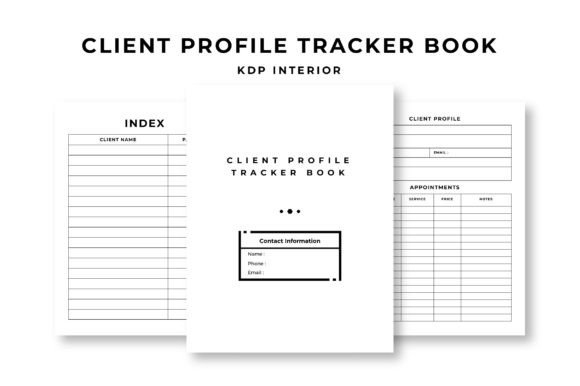
The interior layout of the Client Profile Tracker Book KDP Interior prioritizes clarity over clutter. While you can customize every element through the editable Ai and EPS files, the base structure typically guides you through essential fields without overwhelming you. Common sections might include contact information, preferred communication channels, service history, special dates, and open notes.
That open notes section is quietly powerful. It does not constrain you to dropdown menus or predefined categories. You might write, "Prefers morning calls, tends to get anxious about deadlines, mentioned interest in expanding the project scope in Q3." These human observations often strengthen client relationships more than any formal CRM field ever could.
The package provides flexibility in page counts—100, 110, or 120 pages—so you can match the book thickness to your client roster. A solo esthetician with twenty regulars needs far fewer pages than a bustling accounting firm. Having these options inside one download removes the guesswork.
Building a System That Works Across a Team
While a physical book might sound personal, it can also serve as a shared resource in a small office or studio. A veterinary clinic's front desk staff, for instance, could maintain a profile tracker for long-term patients, noting which pets need special handling or which owners prefer text reminders over phone calls. The book sits at the reception desk, equally accessible to all team members without requiring them to log into a system or remember a password.
Restaurants and cafes with private dining or catering services often keep client preference logs. A profile tracker dedicated to regular private event clients can record menu allergies, table arrangement preferences, and past feedback. When the event coordinator changes, the book remains, preserving institutional knowledge that might otherwise walk out the door.
Practical Considerations Before You Create Your Book
Choosing to work with a printable interior means embracing a few realities worth considering. First, physical books lack the automated search and backup functions of digital tools. If you misplace the book, you lose the data unless you have kept a duplicate. Some users mitigate this by periodically photographing updated pages with their phone, creating a crude but effective backup.
Second, handwriting legibility matters. If multiple people will contribute to the tracker, agreeing on clear notation standards early prevents confusion later. The editable source files let you add printed prompts or checkboxes to reduce reliance on handwritten details where consistency is critical.
Third, consider the binding method. Spiral or comb binding allows the book to lie flat, making it easier to write in. A glued perfect-bound option looks sleeker on a shelf but may resist staying open. The interior files are formatted for standard 8.5 x 11 inches with print-ready specifications, so most local print shops or online services can produce the finished product without technical hiccups.
When Digital Fatigue Pushes People Back to Paper
We live in an era where the average professional switches between multiple apps, browsers, and communication channels every few minutes. Against that backdrop, a singular, analog client tracker can feel almost radical. It does not ding. It does not demand updates. It simply holds the information you entrusted to it.
Entrepreneurs who spend their entire day online—e-commerce store owners, virtual assistants, social media managers—sometimes crave an offline tool precisely because it gives their eyes and minds a break. The Client Profile Tracker Book KDP Interior gives them permission to step away from the screen while still doing meaningful organizational work. That shift in context can subtly improve the quality of attention they bring to each client profile.
There is also something deeply professional about pulling out a well-organized client book during a consultation. It signals preparedness and personal investment. A tablet can feel transactional. A bound book, filled out in your own handwriting, conveys care.
Customizing the Interior for Your Exact Workflow
Since the download includes SVG and PNG files alongside the editable Ai and EPS formats, you are not locked into someone else's idea of what a client profile should capture. A financial advisor could add fields for risk tolerance, portfolio preferences, and review dates. A doula or midwife could incorporate birth plan summaries and comfort measure preferences. A music teacher could include sections for repertoire learned, practice goals, and parent contact notes.
The high-resolution 300 DPI output means any graphics, logos, or custom headers you add will print sharply. You can even color-code sections for different client tiers—perhaps warm-toned pages for premium clients and cooler tones for project-based work. The only limit is your imagination and the printing budget.
The Quiet Longevity of a Well-Kept Record
Software platforms change. Subscriptions lapse. Formats become obsolete. A well-bound client profile book, kept on a shelf, remains readable for years without updates or migrations. For professionals whose client relationships span decades—estate planning attorneys, family photographers, financial coaches—this permanence carries genuine value. The book becomes a living archive, not just a current tracker.
Some users keep older volumes even after clients have moved on, finding that past notes occasionally spark ideas for current work or simply serve as a record of their professional journey. Flipping through pages from five years ago can remind you how much your client base and your own skills have evolved.
The Client Profile Tracker Book KDP Interior provides a framework for this kind of intentional record-keeping without locking you into rigid structures. With editable source files, multiple page-count options, and universally accepted formats, it bridges the gap between digital design convenience and the tactile satisfaction of a physical organizational system. Whether you are a solo entrepreneur craving simplicity or a small team wanting a shared reference point, this interior gives you the bones of a system you can shape to your exact needs, print professionally, and start using immediately.